“Clowns are a necessity of these times, they are a part of our freedom.” — J. Lecoq
We asked Fiora Blasi, curator of the seminar “The Clown and the Art of Making People Laugh” (Teatro della Rosa, September 2–6, 2026), to tell us a bit about the clown and the workshop she will lead at the farm and agritourism estate La Rosa del Colle.
A: The seminar is open to everyone who loves clowns and wants to go deeper… actors and actresses who wish to experience this art, musicians, dancers, circus artists, as well as non-professionals passionate about artistic practices. It is also for anyone who wants to train in an inclusive context, where they can explore both technical tools and the origins and facets of this ancient figure.
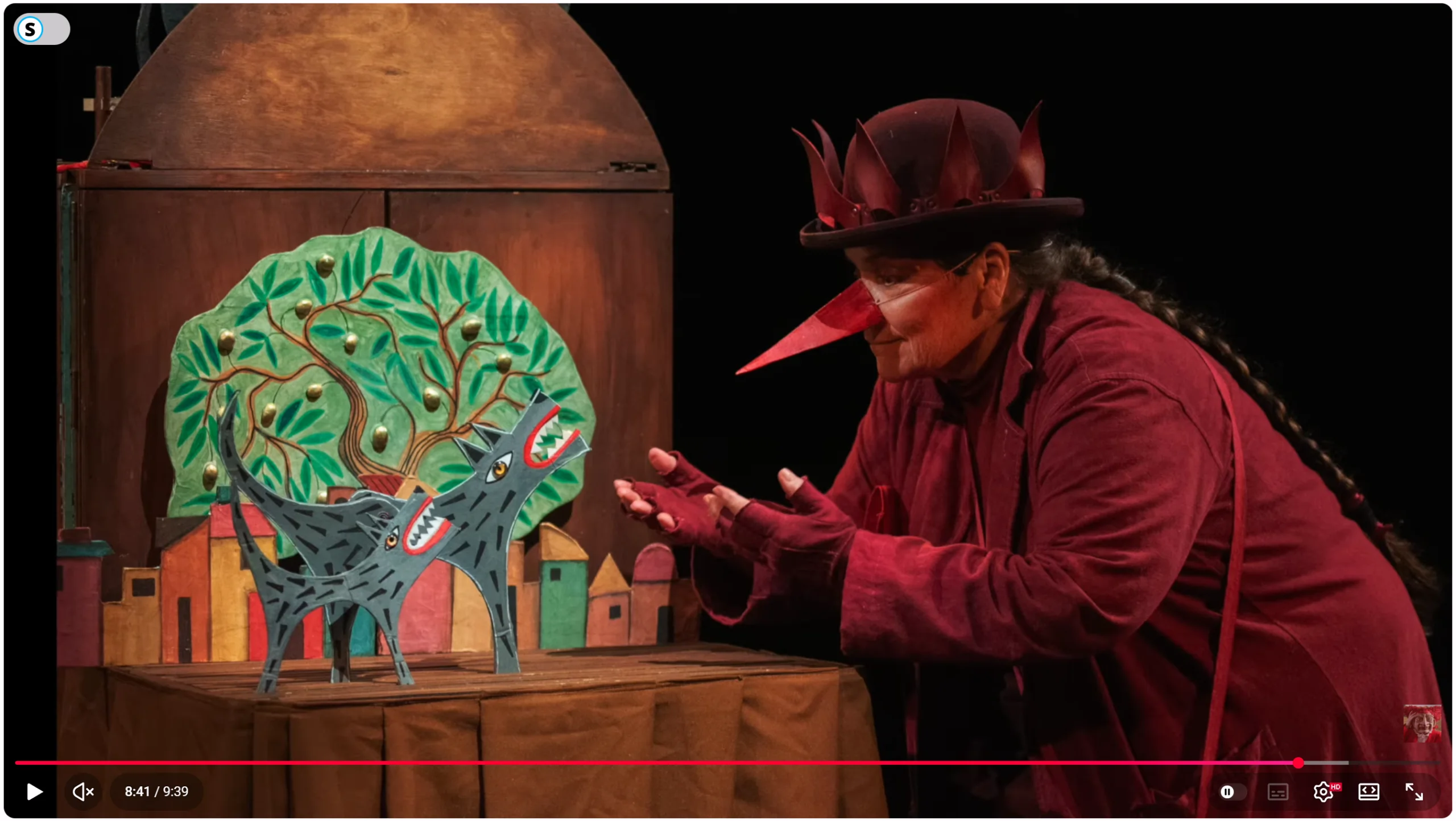
A: In archaic societies, the clown was the Trickster, a sort of shaman whose task was to connect different worlds: the living and the non-living, the human and the animal, the sacred and the profane, through pranks, games, and rituals.
Today, the clown continues to be a liminal figure, bordering circus, theater, and cinema, but also bringing together antithetical parts of ourselves. In short, we could say that a clown is an alter ego that builds bridges between our light and shadow, between our ability to build and our fallibility…
However, anything to do with art cannot bypass an apprenticeship—both artisanal and technical—which is sometimes exhilarating and other times exhausting. Being able to approach this work in a place far from the normal passage of time will foster creativity and yield long-term results.
I think of clown training as a muscle of openness, honesty, and play. The audience loves the fragile strength of clowns who always fall and start over, much like fairy-tale heroes—but unlike them, a clown lingers in shame and failure, two concepts rarely tolerated in our performance-driven society. In a sense, we can say that the art of the clown does not only allow us to engage with tradition and technique, but also helps us creatively experience our pre-textual resources on stage: body, voice, emotions, rhythm, pauses, etc. Indeed, a clown is almost always a creator/author as well.
A: My working program will cover:
Walks, dances, rhythms, and counter-rhythms.
Exaggeration of action.
Grammelot and vocal dialogues.
The rule of three and the gaze.
Improvisation, listening, and modulating.
The void and action: staying and jumping in.
Disguises that unmask.
Authenticity and paradoxes.
Error and virtuosity.
The muscle of availability.
Discovering your own clown: silhouette, costume, body, and skills!
Studying the clown indoors in the studio and outdoors in nature.
A: In this intensive seminar, each participant will gradually build their own clown, discovering its strengths and limits. They will learn to enhance the “ping-pong” dynamic with other clowns. They will have fun discovering what makes people laugh about them and how. They will learn to modulate their resources and play with error. They will learn to manage the void. They will develop their improvisation skills and their capacity to listen to themselves and others.
1:00 PM – 3:00 PM: Arrival and welcome
Brunch
4:00 PM – 7:00 PM: Workshop
8:00 PM: Dinner
8:00 AM – 9:00 AM: Breakfast
9:30 AM – 1:30 PM: Workshop
1:30 PM – 2:30 PM: Lunch
3:00 PM – 6:00 PM: Workshop
8:00 PM: Dinner
8:00 AM – 9:00 AM: Breakfast
9:30 AM – 1:30 PM: Workshop
1:30 PM – 2:30 PM: Lunch
3:00 PM – 6:00 PM: Workshop
8:00 PM: Dinner
8:00 AM – 9:00 AM: Breakfast
9:30 AM – 1:30 PM: Workshop
1:30 PM – 2:30 PM: Lunch
3:00 PM – 6:00 PM: Workshop
7:00 PM: Sharing/showing to an audience of friends
8:30 PM: Dinner, music, chat, and dancing
8:00 AM – 9:00 AM: Breakfast
9:30 AM – 11:30 AM: Workshop
Room tidying, farewells, and departures.
Total working hours: 26
Teatro della Rosa is set in a rural environment surrounded by untouched nature. Here, you step into another dimension where the only sounds are the wind in the trees, the singing of birds, and the occasional distant tractor passing by.
For residential workshops, the hospitality is special, hosted within the Agriturismo La Rosa del Colle:
The sessions will take place in a 70 sqm studio specifically built for intensive workshops and artistic events of all kinds that dialogue with rural life and nature.
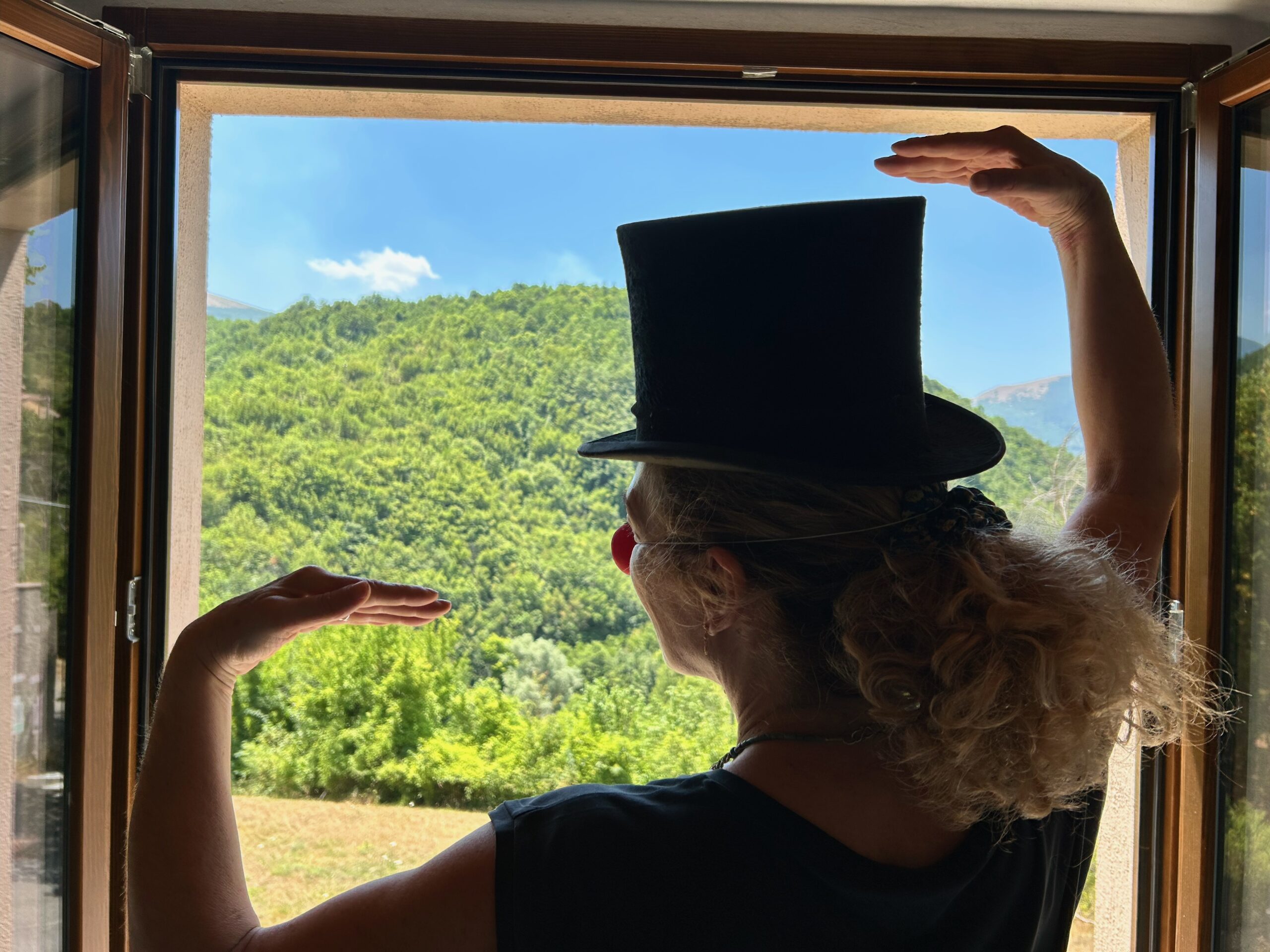
In this studio, four large windows opening onto nature will fill your eyes with vibrant green as you move around with your red nose.
Accommodation is in carefully renovated double rooms with private bathrooms, comfortable beds, and spacious, modern showers.
There is also the option of staying in a shared work room (maximum 4 people) with a bathroom.
Enjoy wholesome meals cooked by Teresa, with careful attention to your dietary preferences and intolerances.
In your free time, enjoy walks in the woods, endless panoramic views, or visits to nearby villages to chat or dance traditional folk dances like saltarello or liscio to the sound of the accordion.
Teatro della Rosa
An independent space for professional and popular theater, curated by Teresa Ruggeri.
👇 For info on workshop fees and registration, email: teruggeri@gmail.com